Is Invisalign Right for You? How to Know If Clear Aligners Fit Your Smile
Is Invisalign right for you? For many people, yes. Clear aligners straighten mild to moderate crowding, spacing, and plenty of bite issues without a single bracket showing. But not every smile is a match on day one. Below, Dr. Stacy Wolf walks you through how the system works, what it costs, and how to tell if you’re a strong candidate.
What Is Invisalign and How Is It Different From Other Clear Aligners?
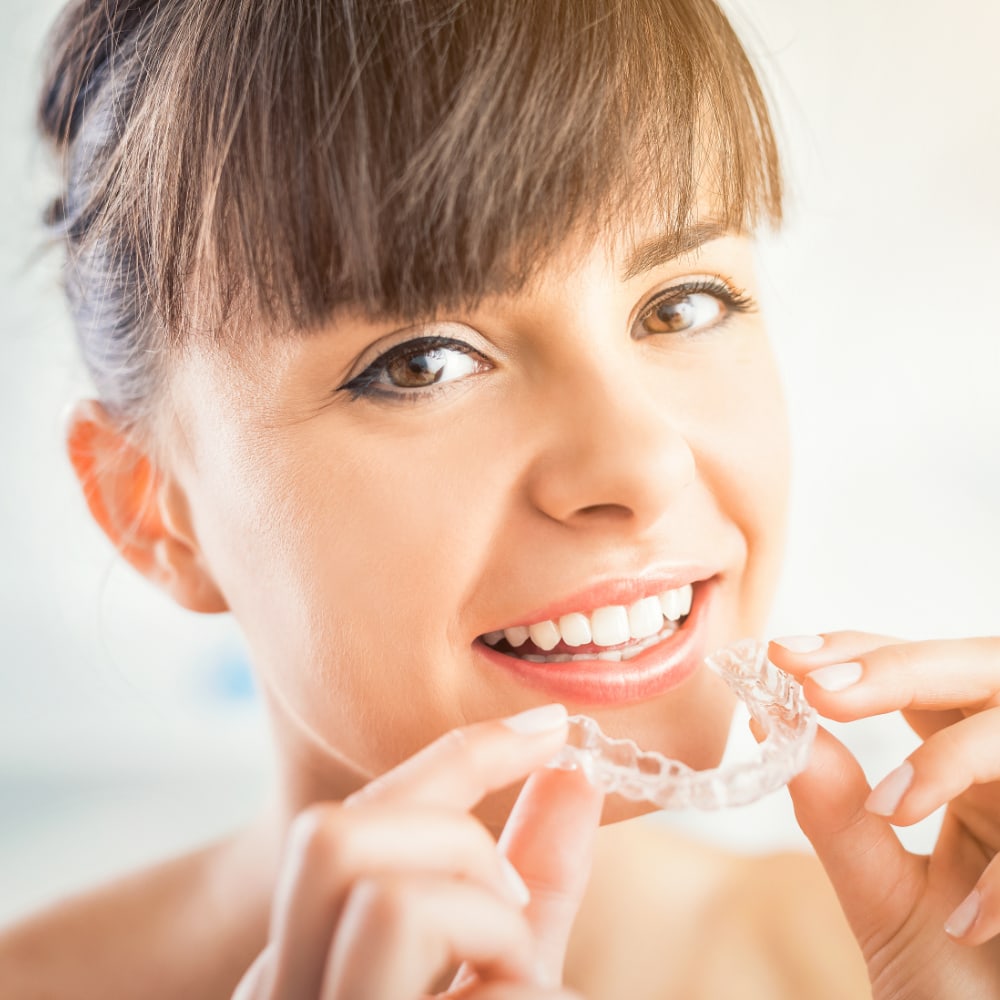
Invisalign is a system of custom-made, removable clear plastic trays that move your teeth in small steps. You wear each tray 20 to 22 hours a day, then switch to the next one on schedule. Invisalign is one brand within the larger clear aligner category, and it treats everything from mild crowding to bite correction with elastics.
The trays themselves are made from a patented multilayer thermoplastic. That material holds gentle, steady force on your teeth instead of the on-and-off pressure older plastics gave. Thin edges make them comfortable against your gums, too.
Most cases also use attachments. These are small tooth-colored bumps bonded to certain teeth so the tray has something to grip. Without them, some movements (rotating a round canine, for example) simply won’t happen. They come off at the end of treatment and nobody notices them in the meantime.
Here’s what separates a doctor-planned case from a mail-order kit: Dr. Wolf takes full diagnostic records, examines your bite in person, and designs the movement sequence herself. Mail-order companies never see your jaw joints, your gum health, or your roots. That in-person exam is the difference between a plan built around your actual anatomy and a plan built from a few photos you took at your kitchen table.
Invisalign handles a wide span of cases, including:
- Crowded teeth and gaps
- Overbite, deep bite, and many open bites
- Crossbite in select cases
- Relapse after braces you had years ago

How Clear Aligner Treatment Works, Step by Step
Clear aligner treatment follows six steps: a free consultation with records, a digital treatment plan designed by your orthodontist, tray delivery with attachments bonded in place, one to two weeks of wear per tray, periodic check-ins to confirm your teeth are tracking, and retainers at the finish to hold your new smile.
Here’s how it goes:
- First visit and records. Photos, X-rays, and a 3D digital scan replace the old putty impressions. No goopy trays, no gagging. The scan takes minutes.
- Digital planning. Dr. Stacy Wolf maps the order of tooth movement, decides where attachments go, and sets the plan for your bite. You get to see a preview of the projected result before you commit.
- Fitting visit. Your trays arrive, attachments are bonded, and you learn how to seat and remove them. Many patients start the same day.
- Wear your series in order. Each tray stays in about one to two weeks, 20 to 22 hours a day. Out for meals, out for brushing, back in right after.
- Check-ins every 6 to 10 weeks. Some are in person, some can be handled virtually. We’re confirming your teeth are following the plan, then handing off your next set of trays.
- Retainers. Teeth drift for life. Retainers lock in the result you worked for.
Miss a few days here and there and the trays stop fitting the way they should. Stay on schedule and the process runs smoothly from start to finish.
Benefits Patients Notice Most With Clear Aligners
Patients tell us the same things over and over. The trays disappear in photos, and daily life barely changes.
- Nearly invisible. Coworkers, classmates, and camera lenses rarely catch them. That matters for teachers, sales reps, brides, and anyone with a yearbook photo coming up.
- Removable when you need them out. Meals, brushing, flossing, a wedding toast. Pop them out, then pop them back in.
- No brackets or wires. Fewer repair visits and far less cheek irritation than fixed appliances.
- Easier hygiene. You brush and floss like normal, which supports healthier gums through treatment.
- You see the plan first. Digital planning shows the projected outcome before you start, so you know what you’re signing up for.
- Eat what you like. Popcorn, bagels, apples, chewy candy. Nothing is off limits when the trays are out.
There’s one more benefit people forget: fewer surprises. Broken brackets create unplanned visits and can stretch treatment. Clear aligners mostly avoid that, as long as you keep your trays in and your case tracking.
Fair warning, though: none of these benefits mean much if the trays spend the day out of your mouth. Fixed braces keep working whether you think about them or not, and that trade-off deserves honest weighing before you choose one path over the other.
Adults appreciate the discretion most. A large share of clear aligner patients are well past their teen years, and many of them say the low profile of the trays is what finally got them into the chair after years of putting it off.

Invisalign vs. Clear Braces vs. Metal Braces: Which Fits Your Case?
Choose your look based on two things: how much correction your bite needs and how your daily habits line up with each option.
| Clear Aligners (Invisalign) | Clear Braces | Metal Braces | |
|---|---|---|---|
| Visibility | Nearly invisible | Tooth-colored brackets blend in | Most visible, fun with colored ties |
| Removable | Yes, for meals and brushing | No | No |
| Hygiene | Easiest, brush and floss normally | Threading floss required | Threading floss required |
| Daily demand on you | 20-22 hours of wear, every day | Nothing to remember | Nothing to remember |
| Diet | No restrictions when trays are out | Some foods off limits | Some foods off limits |
| Case range | Mild to moderate crowding, spacing, many bites with elastics | Many case types | The most case types, including growing kids and involved bites |
| Repair visits | Rare | Occasional loose bracket | Occasional loose bracket |
Clear aligners reward discipline. If you can commit to 20 to 22 hours a day and keep track of your trays, they’re a strong fit.
Clear braces work for patients who want something discreet but would rather not manage anything removable. Ceramic brackets are strong as metal and blend with your natural tooth color.
Metal braces stay the most versatile choice. They are the tried & true orthodontic workhorses of the field, and they shine with growing kids and bites that need heavy lifting. Today’s brackets are smaller and lighter than the ones you remember.
Hybrid plans exist too. Some patients start in braces for the tough movements, then finish in clear aligners. Others use aligners with auxiliaries like elastics or temporary anchorage. Case complexity plus your lifestyle drives the recommendation, and Dr. Wolf makes that call after seeing your records.
What Affects the Cost of Clear Aligner Treatment
Clear aligner cost depends mostly on case complexity and how many trays your smile needs. Treatment length, the number of monitoring visits, whether you treat one arch or both, and what’s included for records, refinements, and retainers all shift the total. Insurance benefits, FSA or HSA dollars, and flexible payments lower what you pay each month.
| Cost factor | How it affects your total |
|---|---|
| Case complexity and tray count | The single biggest driver |
| Treatment length and monitoring visits | Longer cases mean more visits and higher fees |
| Full arch vs. limited or single-arch touch-up | Limited cases cost less than full treatment |
| Records, refinements, and retainers | Sometimes bundled, sometimes billed separately |
| Orthodontic insurance benefits | Many plans include a lifetime orthodontic benefit |
| FSA and HSA funds | Pre-tax dollars stretch further |
| Monthly payment options | Spreads the balance across your treatment |
A relapse case with a handful of trays and a full bite correction sit at opposite ends of the range. That’s why nobody can quote you an accurate number over the phone.
At your free consultation, you’ll get a written estimate with your insurance benefits applied and monthly options laid out. No pressure, no guessing.
Are You a Good Candidate for Invisalign?
Good Invisalign candidates have mild to moderate crowding, spacing, or relapse after prior braces, plus healthy gums and teeth free of untreated decay. Many overbite, deep bite, and open bite cases also work well with aligners paired with elastics. Severe rotations and significant jaw discrepancies often call for braces instead. A clinical exam confirms it.
You’re likely a strong candidate if:
- Your crowding or spacing is mild to moderate
- Your teeth shifted after braces you had years ago
- You have an overbite, deep bite, or open bite that responds to elastics
- Your gums are healthy and any cavities have been treated
- Your crowns, veneers, and bridges are stable
- You can realistically keep trays in 20 to 22 hours a day
Braces may serve you better if:
- Teeth are severely rotated or badly out of position
- Your bite involves a significant skeletal difference between the upper and lower jaws
- Your case requires combined care with an oral and maxillofacial specialist
- You’re a younger patient still growing and need appliances aligners can’t replicate
- You know yourself well enough to admit that removable trays won’t stay in
Neither list is a verdict. Plenty of patients qualify for both paths and simply pick the option that fits their schedule, their budget, and their tolerance for daily upkeep.
Teen aligners include built-in compliance indicators that fade with wear, so parents and Dr. Wolf can see how consistent the wear really is. Adults make up a large share of clear aligner patients at our smile design studio.
Be honest with yourself: will these trays live in your mouth or in your bag? That answer matters as much as the X-rays. Everyone’s welcome to explore the option, and only an exam with full records can confirm which path fits your smile.

Why Patients Trust Stacy Wolf Orthodontics With Clear Aligners
Dr. Stacy Wolf, DDS is a board-certified orthodontist. Like all orthodontists, she was a dentist first before completing additional years of specialty education focused entirely on moving teeth and aligning bites.
According to the American Association of Orthodontists, orthodontists complete two to three years of specialty training after dental school before they can treat patients as specialists. Dr. Wolf holds membership in the AAO and the American Dental Association, and she’s a certified Invisalign provider and 3M provider.
That means your plan is designed by a specialist who sees your bite in person, not by software alone.
If you’re still weighing whether clear aligners fit your case, a free consultation is the practical next step. A first visit at Stacy Wolf Orthodontics includes an exam, digital scans, and a straight answer about whether clear aligners, clear braces, or metal braces make the most sense for your teeth. You’ll leave with a written estimate and a realistic timeline instead of a guess, and you’re free to think it over. Our smile design studio treats kids, teens, and adults with fun, comfort & creativity, and everyone’s welcome to ask as many questions as they need before deciding anything. We’re here to make you smile.
Frequently Asked Questions About Invisalign
How long does Invisalign take compared to braces?
Most clear aligner cases run somewhere in the 12 to 24 month range, similar to braces for comparable cases. Simple spacing or relapse corrections can finish much faster, sometimes in a few months. Complexity and your wear consistency set the timeline more than the appliance does. Dr. Wolf gives you an estimated length at your free consultation.
Does Invisalign hurt, and what does the first week feel like?
Expect pressure and mild soreness for a day or two after each new tray, especially the first few sets. It feels like tightness rather than anything sharp. Most patients switch trays at bedtime so the strongest sensation passes while they sleep. By day three, the tray usually feels like nothing at all.
Can I drink coffee or chew gum with aligners in?
Water is the only thing you should drink with trays in. Coffee, tea, soda, and juice can stain the plastic and pool sugar against your enamel. Gum sticks to the trays and pulls them loose. Take them out, enjoy your coffee, brush or rinse, then put them back in.
What happens if I lose an aligner or forget to wear it?
Call us right away. Depending on where you are in the series, Dr. Wolf may have you move to the next tray, go back to the previous one, or order a replacement. Missing wear time slows tracking, and trays that stop fitting can add refinements to your case. A quick call fixes most of it.
Is Invisalign as effective as braces for bite correction?
For many bite corrections, yes. Clear aligners paired with elastics and attachments handle overbites, deep bites, and a range of open bites well. Certain movements, like large rotations and significant jaw discrepancies, still respond better to fixed braces. Your records tell us which category your bite falls into.
Will I need retainers after clear aligner treatment?
Yes, and this part isn’t optional. Teeth continue shifting throughout life regardless of which appliance straightened them. Dr. Wolf will fit you with retainers at the end of treatment and explain exactly how often to wear them. Retainers keep your finished smile right where Dr. Wolf placed it.